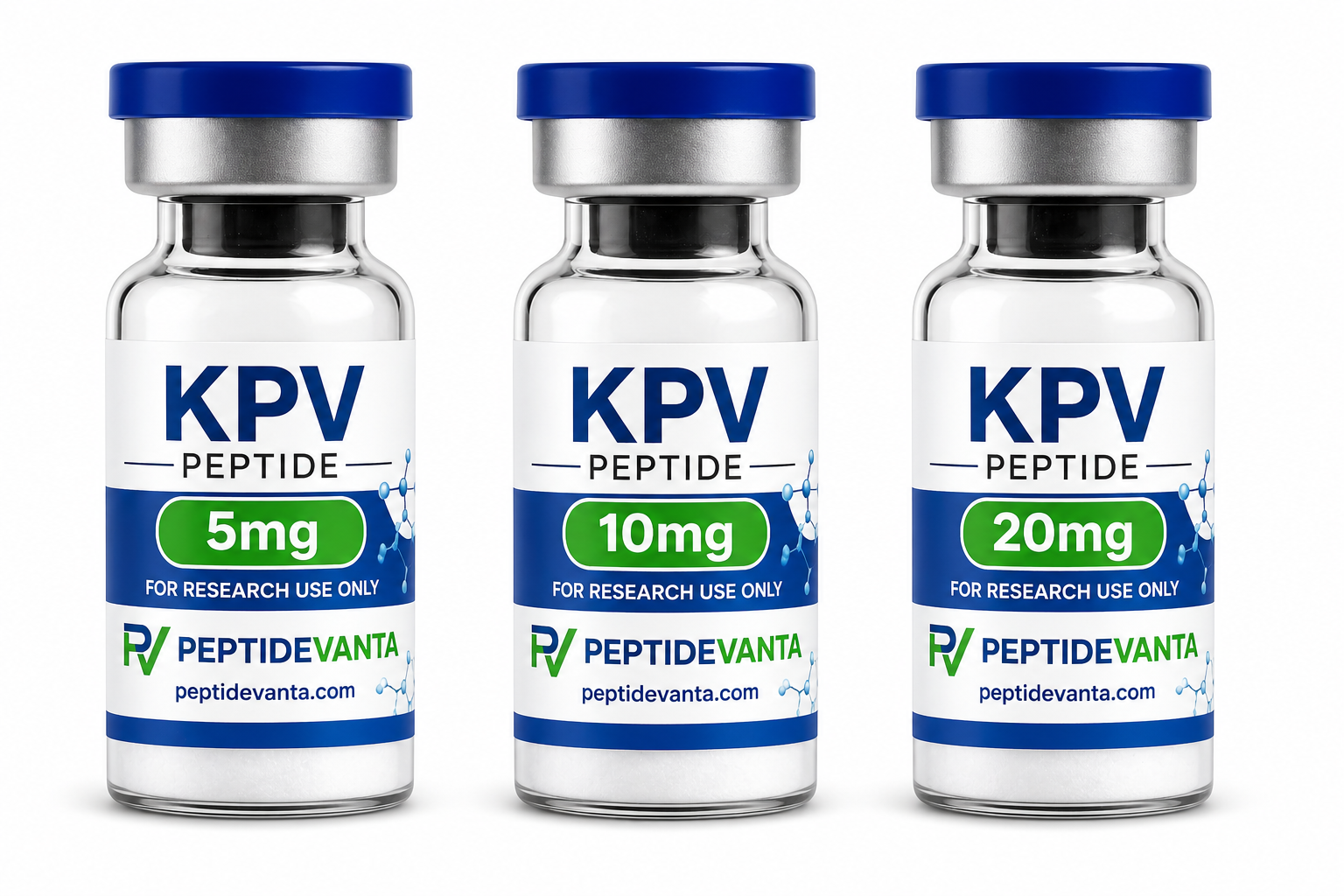
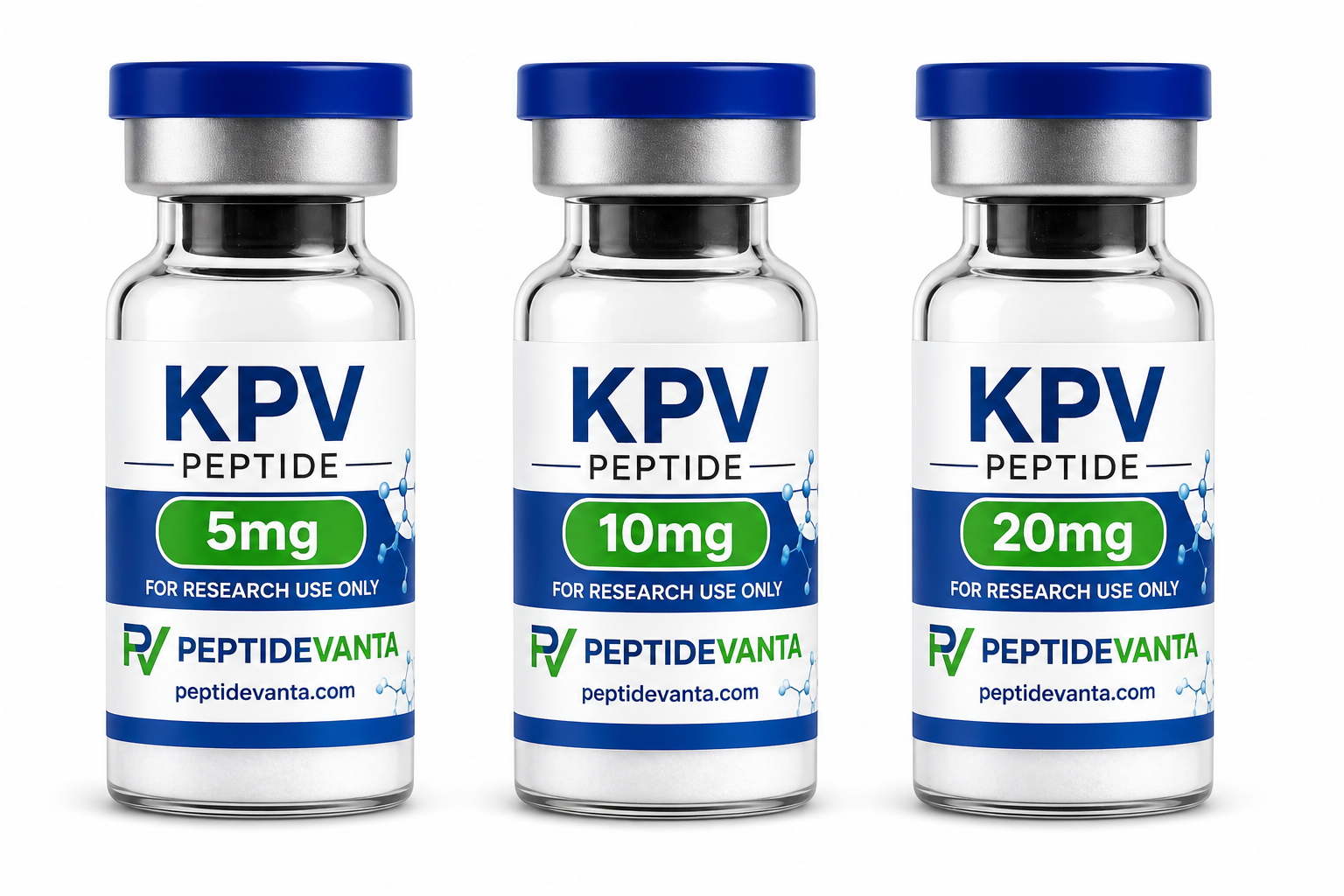
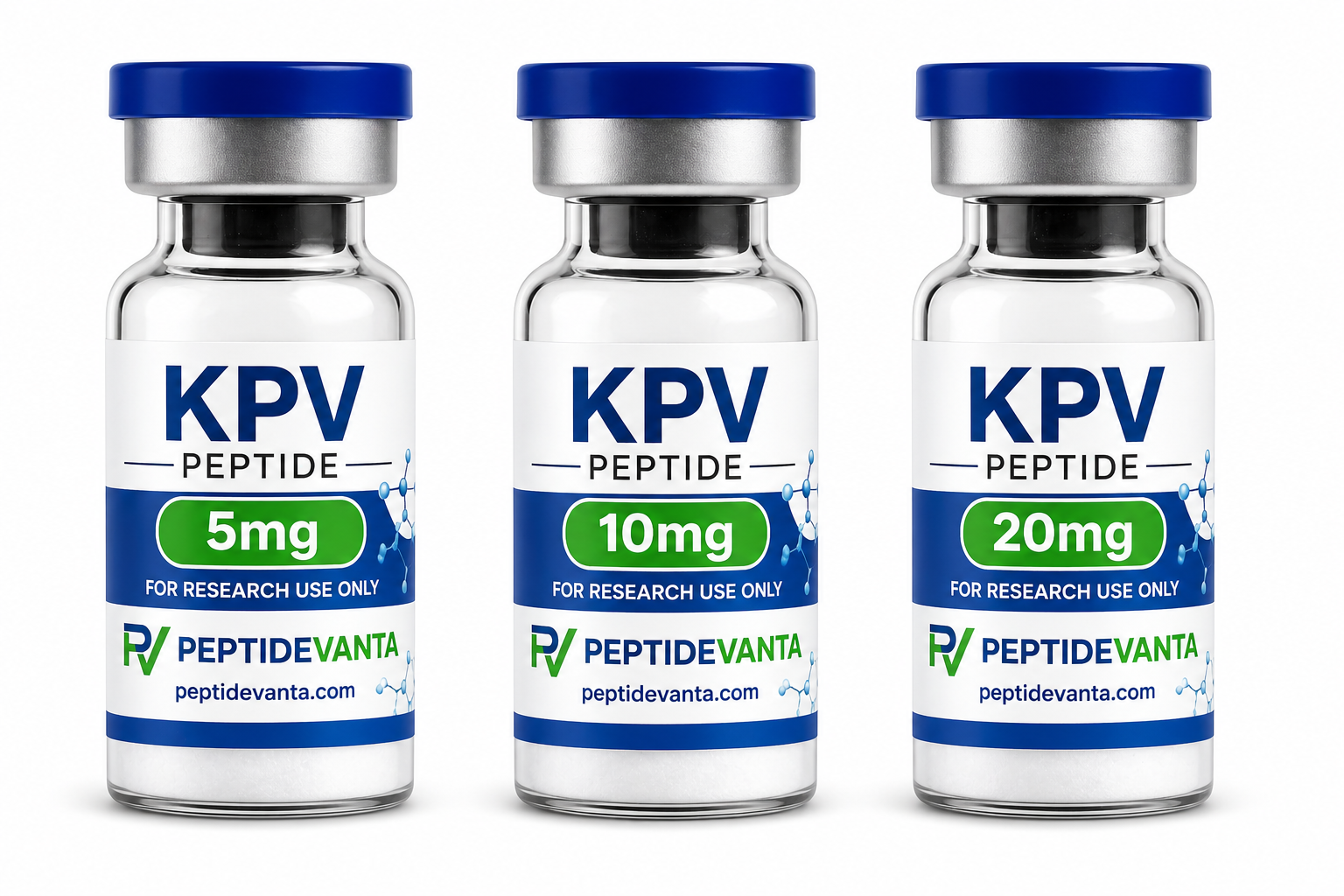
KPV (Lys-Pro-Val) is a synthetic tripeptide corresponding to the C-terminal fragment (amino acids 11-13) of alpha-melanocyte-stimulating hormone (α-MSH). This naturally occurring sequence has been extensively studied for its potent anti-inflammatory and immunomodulatory properties, independent of melanocortin receptor activation. Discovered through structure-activity relationship studies of the α-MSH molecule, the KPV tripeptide represents the minimal sequence required for significant anti-inflammatory activity. Unlike full-length α-MSH, which activates melanocortin receptors and induces pigmentation effects, KPV retains potent anti-inflammatory activity while lacking pigmentation effects, making it a uniquely valuable tool for studying cytokine regulation, NF-κB signaling, and inflammatory pathways without the confounding variable of melanocortin receptor activation. The peptide has demonstrated efficacy in various inflammation models, including inflammatory bowel disease (IBD), dermatitis, arthritis, and neuroinflammation. PeptideVanta offers premium-grade KPV with verified 99%+ purity through third-party HPLC testing.
✔ 99%+ purity (HPLC verified)
✔ Third-party tested with COA
✔ Lyophilized powder in sterile vials
✔ α-MSH-derived anti-inflammatory tripeptide
✔ Potent cytokine and NF-κB modulation
✔ Discreet worldwide shipping
KPV (Lysine-Proline-Valine) is a synthetic tripeptide corresponding to the C-terminal fragment (amino acid residues 11-13) of alpha-melanocyte-stimulating hormone (α-MSH). While the full-length α-MSH peptide (13 amino acids) is known for its pigmentation effects via melanocortin receptor activation (MC1R), the KPV tripeptide has been discovered through extensive structure-activity relationship studies to retain potent anti-inflammatory and immunomodulatory activities through mechanisms independent of classical melanocortin receptors. This makes KPV a uniquely valuable research tool for studying inflammation, cytokine regulation, and immune modulation without the pigmentation-related confounding factors associated with full-length α-MSH or other melanocortin agonists. The peptide has been shown to be effective across multiple species and inflammation models, demonstrating remarkable potency despite its small size. The minimal sequence required for anti-inflammatory activity, KPV represents the culmination of decades of research into the structure-function relationships of the melanocortin peptide family. PeptideVanta offers premium-grade KPV with verified 99%+ purity through third-party HPLC testing.
KPV exerts its anti-inflammatory effects through multiple well-characterized pathways that are distinct from classical melanocortin receptor activation:
The identification of KPV as the minimal active anti-inflammatory sequence of α-MSH represents a landmark discovery in peptide pharmacology. Through systematic deletion studies, researchers determined that while the central tetrapeptide His-Phe-Arg-Trp (α-MSH 6-9) is critical for melanocortin receptor binding and pigmentation, the C-terminal tripeptide KPV (α-MSH 11-13) retains significant anti-inflammatory activity through entirely different mechanisms. This finding has important implications for drug development, as KPV offers a simplified, more stable, and more selective anti-inflammatory peptide without the pigmentation and other off-target effects of full-length α-MSH. The discovery has led to numerous patents and clinical investigations into KPV-based therapeutics for inflammatory diseases.
CAS Number: 160522-97-8
Research Codes: KPV, Lys-Pro-Val, α-MSH (11-13), Anti-inflammatory tripeptide, KPV tripeptide
Molecular Formula: C16H29N5O4
Molecular Weight: 355.4 g/mol
Sequence: H-Lys-Pro-Val-OH (Lysine-Proline-Valine)
Number of Amino Acids: 3 (tripeptide)
Isoelectric Point (pI): 10.5 (basic peptide)
Net Charge at pH 7.4: +1 (positively charged)
Purity: >99% (HPLC)
Form: Lyophilized powder
Solubility: Soluble in water, saline, PBS, and DMSO (excellent aqueous solubility due to basic lysine residue)
Storage: -20°C (lyophilized), 4°C (reconstituted)
Stability: Stable at -20°C for 24 months; reconstituted solution stable at 4°C for 30 days
For optimal stability and research validity, KPV should be reconstituted with sterile bacteriostatic water, sterile saline (0.9% NaCl), or sterile PBS. Due to its basic nature (pI 10.5) and excellent aqueous solubility, KPV dissolves readily in water-based solutions without the need for organic solvents or pH adjustment. Allow the lyophilized powder to dissolve completely without vigorous shaking to maintain peptide integrity. Gently swirl the vial until the solution is clear and free of particulates. Once reconstituted, the solution should be stored at 4°C and used within 30 days. Avoid repeated freeze-thaw cycles to preserve peptide structure and biological activity. For long-term storage, keep the lyophilized powder at -20°C away from light and moisture. Do not vortex or vigorously shake the reconstituted solution, as this may cause aggregation and reduce biological activity.
PeptideVanta's KPV undergoes rigorous quality control including HPLC purity analysis (>99%), ESI-mass spectrometry for molecular weight confirmation (expected 355.4 Da), amino acid analysis to confirm correct composition, endotoxin testing (<1.0 EU/mg), sterility testing, and residual solvent analysis. Each batch is accompanied by a Certificate of Analysis (COA) with complete testing results. The peptide is synthesized using solid-phase peptide synthesis (SPPS) with Fmoc chemistry, followed by HPLC purification and lyophilization under sterile conditions.
KPV is essential for our anti-inflammatory research. PeptideVanta's product consistently shows high purity and potent immunomodulatory activity in our cell-based assays. The NF-κB inhibition is clearly reproducible.
We've standardized on PeptideVanta for KPV. The 10mg vials are perfect for our cytokine regulation studies. Batch-to-batch consistency is outstanding.
Very impressed with the quality. The 20mg vials reconstitute perfectly. Shipping was prompt and discreet.
PeptideVanta is our trusted supplier for KPV. The COA is accurate, and the peptide performs exceptionally well in our IBD model studies.
876 verified reviews | 4.7/5 average rating
Every batch of KPV undergoes rigorous third-party testing for purity, mass identity, amino acid composition, endotoxin levels, and sterility.
99.2%
355.4 Da
Confirmed
< 0.5 EU/mg
Pass
Compliant
📄 Download full COA report (PDF) | Request batch-specific COA
📍 Shipping Destinations: USA, Canada, Australia, United Kingdom, Europe, South America, Asia, and worldwide.
🚚 Shipping Methods: Discreet, temperature-controlled packaging with real-time tracking number provided upon shipment.
⏱ Estimated Delivery Times:
- USA: 3-7 business days
- Canada: 5-10 business days
- Australia: 7-12 business days
- United Kingdom: 5-10 business days
- Europe: 7-14 business days
- International: 10-20 business days
🔒 Privacy Guarantee: All orders shipped in discreet, unmarked packaging with no external indication of contents. Your privacy is our priority.
🌡 Temperature Control: Peptides are shipped with ice packs during warmer months to maintain stability throughout transit.
📦 Tracking: A tracking number will be emailed once your order has been processed and shipped.