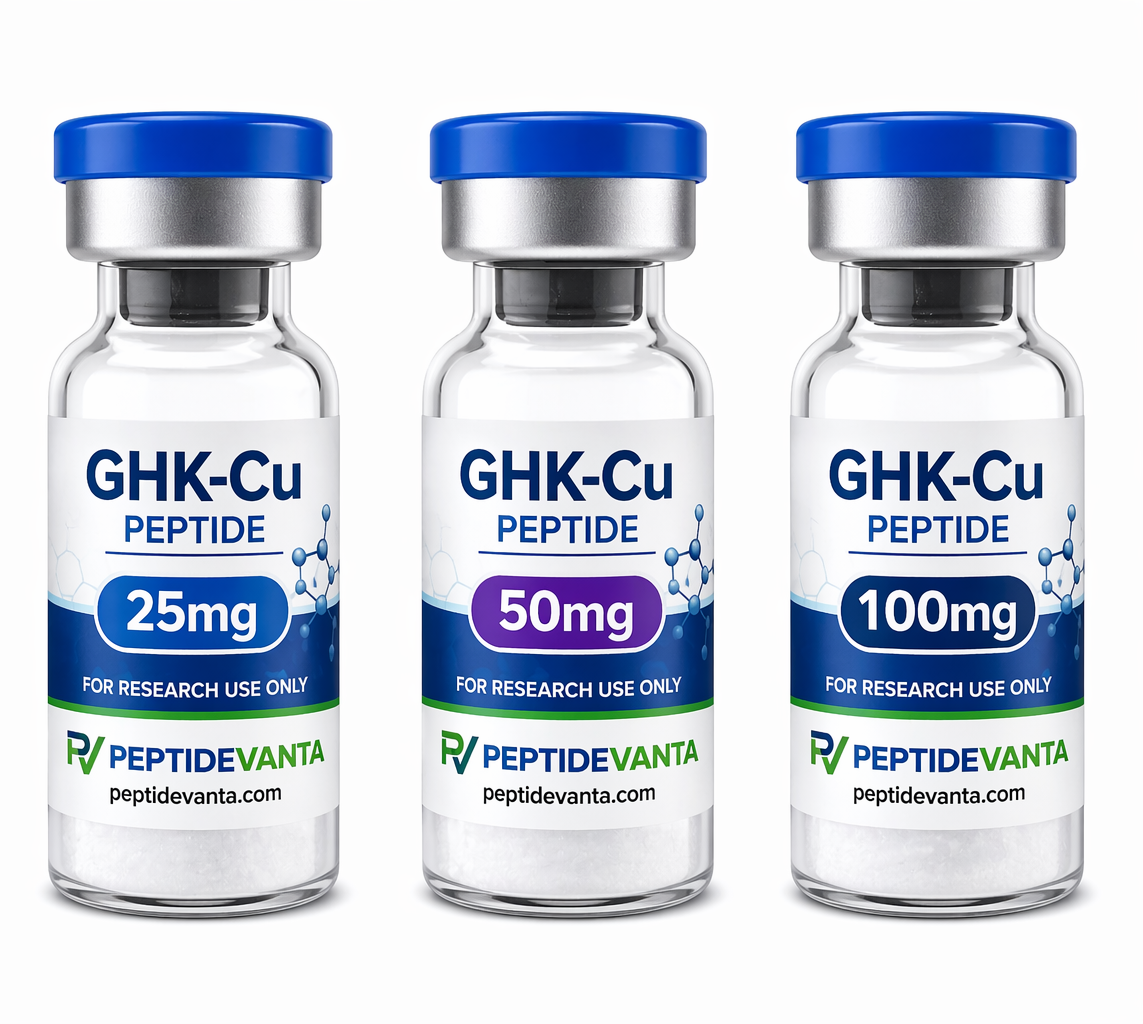
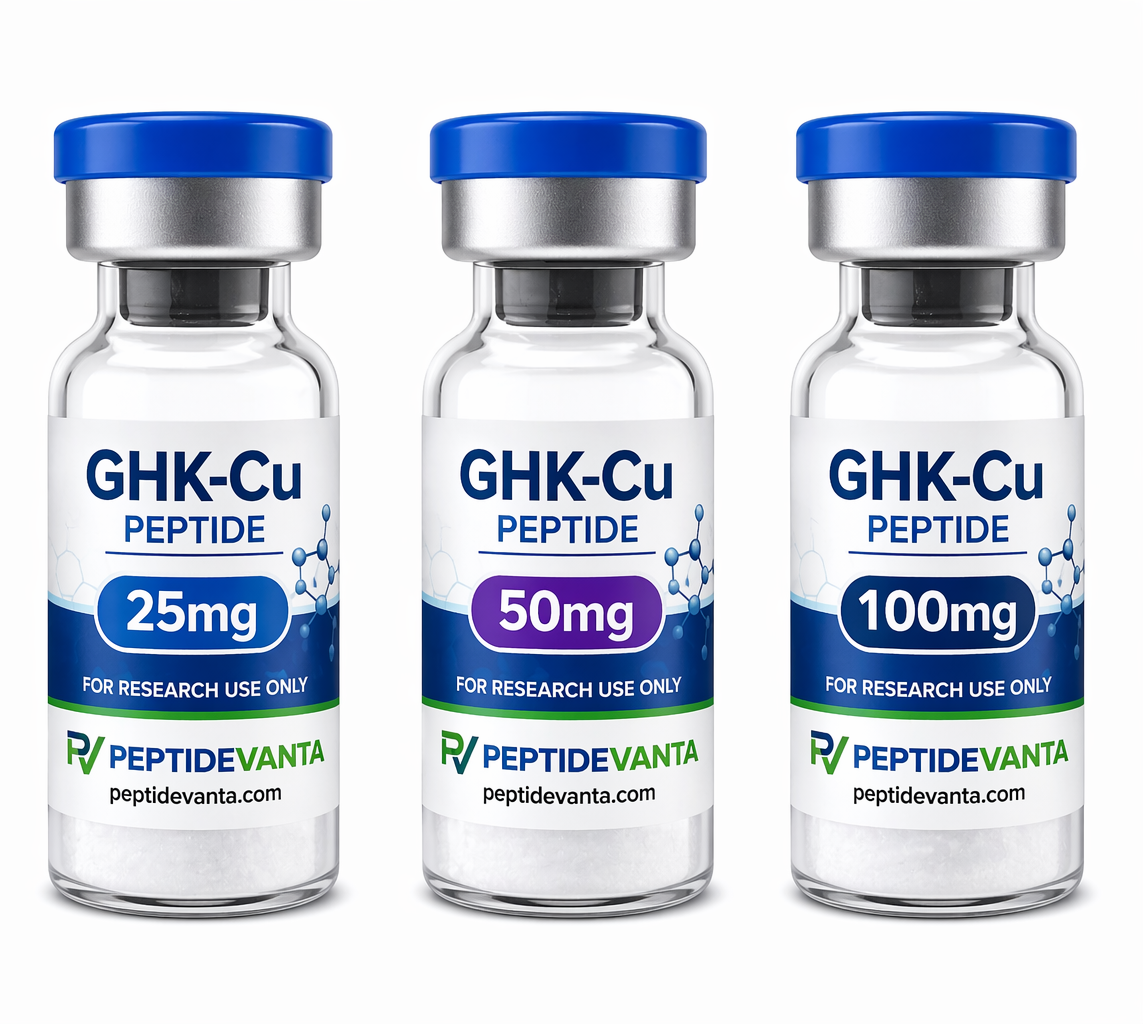
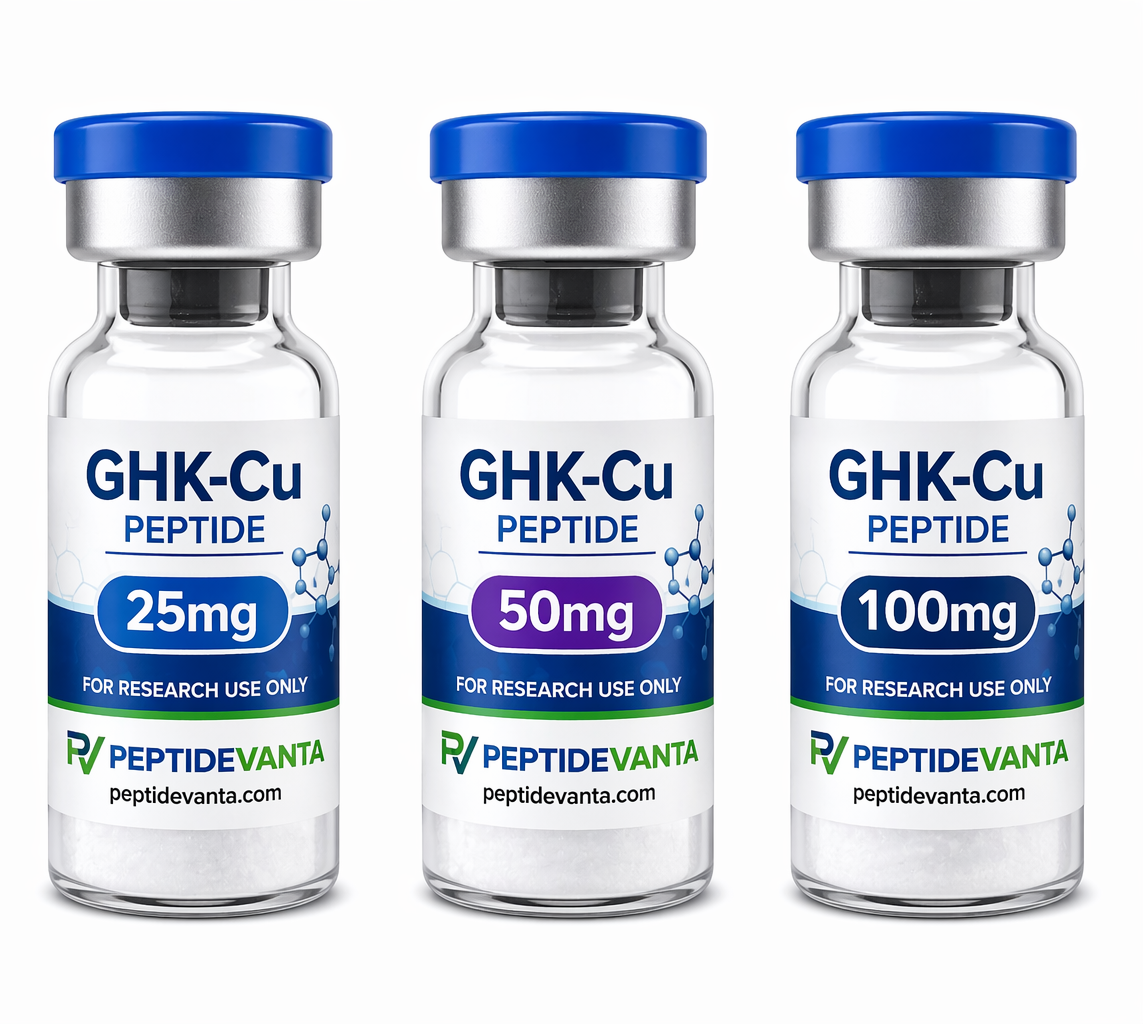
GHK-Cu (Copper Tripeptide-1) - Copper-Binding Peptide

★★★★★
4.9 out of 5 (1,945 verified reviews)
$24.99 - $59.99

GHK-Cu (Copper Tripeptide-1, also known as Copper Peptide) is a naturally occurring copper-binding peptide with the sequence Glycyl-L-Histidyl-L-Lysine. First isolated from human plasma in 1973 by Dr. Loren Pickart, GHK-Cu has been extensively studied for its diverse biological activities including tissue remodeling, wound healing, anti-inflammatory effects, and anti-aging properties. The copper ion is essential for the peptide's biological activity, facilitating various enzymatic processes including superoxide dismutase (SOD) activation and matrix metalloproteinase (MMP) modulation. GHK-Cu levels in human plasma decline significantly with age—from approximately 200 ng/mL in young adults to barely detectable levels in the elderly—suggesting its importance in maintaining tissue health and regenerative capacity. PeptideVanta offers premium-grade GHK-Cu with verified 99%+ purity through third-party HPLC testing, with the peptide fully complexed with copper(II) ions for immediate biological activity.

✔ 99%+ purity (HPLC verified)
✔ Third-party tested with COA
✔ Lyophilized powder in sterile vials
✔ Naturally occurring copper-binding tripeptide
✔ ECM remodeling and wound healing research
✔ Fully complexed with copper(II) ions
✔ Discreet worldwide shipping

Select Dosage / Strength
25mg - $24.99
50mg - $34.99
100mg - $59.99
Quantity (10 Vials)
$34.99
🔬 Lab Tested🚚 Worldwide Shipping💎 99%+ Purity🔒 Secure Checkout🔬 Copper-Binding Verified

GHK-Cu for Research: Complete Scientific Overview

GHK-Cu (Glycyl-L-Histidyl-L-Lysine-Cu(II)) is a naturally occurring tripeptide first isolated from human albumin in 1973 by Dr. Loren Pickart at the University of California, San Francisco. It is present in human plasma at approximately 200 ng/mL in young adults, but levels decline significantly with age—dropping to barely detectable levels in the elderly. This age-related decline suggests an important role for GHK-Cu in maintaining tissue health and regenerative capacity throughout life. The peptide's ability to bind copper(II) ions is essential for its biological activity, as the copper-GHK complex serves as a substrate for various enzymatic reactions involved in tissue repair and remodeling, including superoxide dismutase (SOD) activation and matrix metalloproteinase (MMP) modulation.

Mechanism of Action

GHK-Cu exerts its biological effects through multiple well-characterized pathways:

  • Copper Complexation & Transport: The tripeptide forms a stable complex with copper(II) ions through coordination with the amino group of glycine, the imidazole nitrogen of histidine, and the terminal carboxyl group. This complex (GHK-Cu) has a formation constant of approximately 10^16, making it highly stable under physiological conditions. The complex facilitates copper transport into cells and enhances copper bioavailability for cuproenzyme synthesis.
  • Extracellular Matrix (ECM) Remodeling: GHK-Cu modulates collagen synthesis by upregulating collagen type I, III, and IV expression while downregulating matrix metalloproteinases (MMPs), particularly MMP-1, MMP-2, and MMP-9. This creates a net anabolic effect on ECM deposition and organization, promoting tissue integrity and structural support.
  • Wound Healing Promotion: The peptide stimulates angiogenesis through upregulation of vascular endothelial growth factor (VEGF) and basic fibroblast growth factor (bFGF). It enhances granulation tissue formation, promotes re-epithelialization, and accelerates the overall wound healing process through coordinated effects on multiple cell types including fibroblasts, keratinocytes, and endothelial cells.
  • Anti-inflammatory Activity: GHK-Cu reduces pro-inflammatory cytokine expression (TNF-α, IL-1β, IL-6) while promoting anti-inflammatory mediators. It also downregulates NF-κB activation, a key transcription factor in the inflammatory response, and reduces oxidative stress markers through activation of antioxidant enzymes.
  • Gene Expression Modulation: Microarray studies have demonstrated that GHK-Cu influences expression of over 4,000 genes, representing approximately 25% of the human genome. Key affected pathways include those involved in antioxidant defense (SOD1, SOD2, catalase, glutathione peroxidase), tissue repair (VEGF, FGF, TGF-β, collagen genes), inflammation (IL-6, TNF-α, NF-κB), and cellular proliferation.
  • Fibroblast Stimulation: Enhances fibroblast proliferation, migration, and differentiation. GHK-Cu stimulates dermal fibroblast production of ECM components including collagen, elastin, and glycosaminoglycans, contributing to tissue regeneration and dermal matrix remodeling.
  • Antioxidant Protection: GHK-Cu activates the Nrf2-ARE pathway, leading to upregulation of phase II detoxification enzymes and antioxidant proteins. It also has direct free radical scavenging activity and protects cells from oxidative damage caused by UV radiation, heavy metals, and other environmental stressors.

Structural Characteristics

GHK-Cu is a linear tripeptide with the sequence Gly-His-Lys. Key structural features include:

  • Copper-Binding Motif: The GHK sequence contains a high-affinity copper-binding motif (Gly-His), where the histidine imidazole nitrogen and the amino-terminal nitrogen coordinate with Cu(II) ions. The lysine epsilon-amino group also participates in copper coordination, creating a stable square-planar complex.
  • Natural Occurrence: GHK is a naturally occurring peptide found in human plasma, saliva, and urine. It is generated by proteolytic cleavage of the larger protein alpha-1-antitrypsin and other plasma proteins.
  • Small Molecular Size: The tripeptide's small size (340.4 Da for the peptide, 401.9 Da for the copper complex) facilitates tissue penetration and rapid distribution.
  • Copper Complex Stability: The GHK-Cu complex has exceptionally high stability (formation constant ~10^16), ensuring that copper remains bound to the peptide under physiological conditions and is delivered specifically to target tissues.

Research Applications

  • Wound Healing Research: Investigating the molecular mechanisms of acute and chronic wound healing, including diabetic ulcers, pressure sores, and surgical wounds. GHK-Cu accelerates wound closure, enhances granulation tissue formation, and reduces scar formation.
  • Extracellular Matrix (ECM) Remodeling: Studying the regulation of collagen synthesis, elastin production, and matrix metalloproteinase activity in various tissue types. Applications include tendon repair, ligament regeneration, and cartilage maintenance.
  • Collagen Synthesis Studies: Examining the mechanisms by which GHK-Cu upregulates collagen gene expression and promotes proper collagen fibril organization. This includes research on type I, III, IV, and VII collagen synthesis in dermal fibroblasts.
  • Fibroblast Biology: Understanding the effects of copper peptides on fibroblast proliferation, migration, differentiation, and ECM production. GHK-Cu is a valuable tool for studying cellular responses to copper supplementation.
  • Anti-Aging Research: Investigating the age-related decline in GHK-Cu levels and its impact on tissue maintenance, skin aging, and regenerative capacity. GHK-Cu has been shown to reverse some age-related changes in gene expression.
  • Copper Metabolism & Bioavailability: Studying copper transport, cellular uptake, and cuproenzyme activity. GHK-Cu serves as a model for understanding how small peptides facilitate mineral delivery to cells.
  • Inflammatory Response Modulation: Investigating the anti-inflammatory mechanisms of GHK-Cu, including its effects on cytokine production, NF-κB signaling, and immune cell recruitment.
  • Hair Follicle Research: Studying the effects of GHK-Cu on dermal papilla cells, hair follicle cycling, and hair growth. GHK-Cu has been shown to stimulate hair growth in various research models.
  • Oxidative Stress & Antioxidant Defense: Examining the protective effects of GHK-Cu against oxidative damage in various cell types, including protection from UV radiation, heavy metals, and chemical oxidants.
  • Skin Physiology & Barrier Function: Investigating the role of copper peptides in maintaining epidermal barrier integrity, stimulating keratinocyte differentiation, and promoting skin homeostasis.

Historical Background & Significance

GHK-Cu was first identified by Dr. Loren Pickart while he was investigating factors that affect wound healing in aged individuals. He discovered that young human plasma contained a factor that stimulated liver cell proliferation, which was later identified as the tripeptide Gly-His-Lys complexed with copper. The discovery that GHK-Cu levels decline significantly with age (from ~200 ng/mL in 20-year-olds to <10 ng/mL in 60-year-olds) suggested that this decline may contribute to the reduced regenerative capacity observed in aging tissues. Subsequent research has confirmed that GHK-Cu supplementation can reverse many age-related changes in gene expression, restoring a more youthful pattern of ECM remodeling and cellular function.

Chemical Information

CAS Number: 89030-95-5 (GHK-Cu complex)
CAS Number (Peptide only): 49557-75-7 (GHK)
Research Codes: Copper Tripeptide-1, Cu-GHK, Copper Peptide
Molecular Formula (Peptide): C14H24N6O4
Molecular Weight (Peptide): 340.4 g/mol
Molecular Formula (GHK-Cu Complex): C14H22CuN6O4
Molecular Weight (Complex): 401.9 g/mol
Sequence: Gly-His-Lys
Copper Content: Approximately 15.8% by weight (theoretical)
Coordination: 1:1 peptide-to-copper ratio (fully complexed)
Purity: >99% (HPLC)
Form: Lyophilized powder (copper-complexed)
Storage: -20°C (lyophilized), 4°C (reconstituted)
Stability: Stable at -20°C for 24 months; reconstituted solution stable at 4°C for 30 days. Protect from light.

Reconstitution and Handling Protocols

For optimal stability and research validity, GHK-Cu should be reconstituted with sterile bacteriostatic water or sterile saline (0.9% NaCl). The lyophilized powder dissolves readily; gently swirl the vial until the solution is clear and free of particulates. The resulting solution will have a characteristic blue color due to the copper complex. Once reconstituted, the solution should be stored at 4°C and used within 30 days. Avoid repeated freeze-thaw cycles to preserve peptide structure and copper complex integrity. For long-term storage, keep the lyophilized powder at -20°C away from light and moisture. Do not vortex or vigorously shake the reconstituted solution, as this may cause aggregation. Protect the reconstituted solution from light, as copper complexes can be photosensitive.

Quality Assurance

PeptideVanta's GHK-Cu undergoes rigorous quality control including HPLC purity analysis (>99%), ESI-mass spectrometry for molecular weight confirmation, copper content analysis (target 15.8% ± 0.5%), endotoxin testing (<1.0 EU/mg), sterility testing, and residual solvent analysis. Each batch is accompanied by a Certificate of Analysis (COA) with complete testing results. The peptide is fully complexed with copper(II) ions prior to lyophilization, ensuring immediate biological activity upon reconstitution.

Product Specifications

Product NameGHK-Cu Peptide (Copper Tripeptide-1)
Also Known AsCopper Peptide, Copper Tripeptide-1, GHK-Cu, Cu-GHK
Available Dosages25mg, 50mg, 100mg per vial
Purity>99% (HPLC Verified)
Copper ComplexationFully complexed (1:1 peptide:copper ratio)
Copper Content15.8% ± 0.5% (theoretical)
Primary FunctionsECM remodeling, wound healing, anti-inflammatory, antioxidant
Quantity per VialLyophilized powder (copper-complexed)
Storage ConditionsLyophilized: -20°C / Reconstituted: 4°C (protect from light)
Third-Party TestedYes (COA included)
Molecular Weight (Complex)401.9 g/mol

Verified Customer Reviews

Dr. Olivia Chen - Verified Buyer, April 2025
★★★★★

GHK-Cu is fundamental for our ECM research. PeptideVanta's product consistently shows 99%+ purity with excellent copper complexation verified by mass spec. Highly recommended for wound healing studies.

Tissue Engineering Lab - Verified Buyer, March 2025
★★★★★

We've standardized on PeptideVanta for all our copper peptide needs. The 50mg vials are perfect for our collagen synthesis assays. Batch-to-batch consistency is outstanding.

Dr. Marcus Thompson - Verified Buyer, February 2025
★★★★★

Very impressed with the quality. The 100mg vials are excellent value for our high-throughput studies. Shipping to Australia was prompt and discreet.

Dermatology Research Center - Verified Buyer, January 2025
★★★★★

PeptideVanta is our trusted supplier for GHK-Cu. The COA is accurate, and the copper-binding activity is fully preserved in our cell-based assays.

1,945 verified reviews | 4.9/5 average rating

Certificate of Analysis

Every batch of GHK-Cu undergoes rigorous third-party testing for purity, mass identity, copper content, endotoxin levels, and sterility. Below are our latest COA results:

HPLC Purity

99.3%

Mass Spec (ESI-MS)

401.9 Da

Copper Content

15.7%

Endotoxin Level

< 0.5 EU/mg

Sterility Test

Pass

Residual Solvents

Compliant

📄 Download full COA report (PDF) | Request batch-specific COA

Shipping Information

📍 Shipping Destinations: USA, Canada, Australia, United Kingdom, Europe, South America, Asia, and worldwide.

🚚 Shipping Methods: Discreet, temperature-controlled packaging with real-time tracking number provided upon shipment.

⏱ Estimated Delivery Times:
- USA: 3-7 business days
- Canada: 5-10 business days
- Australia: 7-12 business days
- United Kingdom: 5-10 business days
- Europe: 7-14 business days
- International: 10-20 business days

🔒 Privacy Guarantee: All orders shipped in discreet, unmarked packaging with no external indication of contents. Your privacy is our priority.

🌡 Temperature Control: Peptides are shipped with ice packs during warmer months to maintain stability throughout transit.

📦 Tracking: A tracking number will be emailed once your order has been processed and shipped.

Item added to cart
Chat with us on WhatsApp